



Structure Your Service BDC to Succeed
BDC Expert Greg Wells explains the basics of properly structuring a service BDC to ensure success.

In January, while visiting a new client for the first time, I was introduced to the dealership’s service BDC. Her name was Kelley. “Kelley,” I was told, “is our Service BDC rep.” She answers all service calls, schedules appointments, confirms service appointments, does service follow-up and calls customers when their parts come in, along with a variety of other things to help keep the service lane moving. She’s also the warranty clerk, back-up cashier, and on Saturdays acts as the company’s switchboard operator. I thought she must be the bionic woman!
When talking to Kelley I discovered she wasn’t the bionic woman. Instead, she was on the verge of a nervous breakdown. I asked, “So tell me how it’s going?” She shared with me that she had 400 open to-do items on her CRM dashboard, eight fresh service Internet leads to respond to and twenty-something voicemails. On top of that, she was behind on her warranty work and hadn’t made a follow-up call in weeks. I let her vent for about an hour and then we got down to the business of fixing things.
I’ve never met a frontline employee so happy to see me. Unfortunately, this is not an uncommon occurrence for me. As I told Kelley, “I’ve seen this movie,” and I’ll tell you, it is a tragedy.
I understand that dealers need to be lean and mean these days, especially when it comes to personnel. I’m a disciple of “throw a process at it instead of people,” but sometimes things are just structured to fail. In the wake are really good people getting bulldozed by the workload.
When building a BDC (sales, service or both), structure is the foundation of success. You can put ordinary people in a great structure and see extraordinary results. Conversely, you can put extraordinary people, like Kelley, in a poor structure and see dismal results.
So what’s the structure formula? Here are a few tips to help you structure your service BDC for success.
It begins with a clearly-defined vision of what you want your service BDC to do. In Kelley’s case this was nonexistent. It kind of started out with closed RO calls and snowballed into her state of pending death by task completion.
Is your goal to relieve service advisors of phone pressure? It’s a worthy goal for sure, not only for the service advisor’s ability to stay engaged with customers in the service lane, but your customers benefit too. In our experience, diverting inbound service calls to a service BDC increases appointment setting from around 40 percent to 70 percent. The process also reduces hang-ups and customers sent to voicemail by 30 percent.
Maybe you also want to make sure your service customers are satisfied with the work you performed. Your service BDC can improve SSI and survey response significantly and discover defects in your processes or recognize trends particular to a certain technician or job.
Outbound processes such as sold-no-service, first service appointment, missed appointments, six-months-no-service, declined service and so on drive service traffic, and the ROI will certainly be there.
The point is you have to begin with the end in mind or you create a train that is sure to come off the tracks. Once you have established what you want from your service BDC, it’s time to do some math. Since your employees are mere mortals, doesn’t it make sense to calculate what your capacity is per employee in a service BDC?
These simple equations begin with how many inbound appointment calls you are getting, the number of closed ROs each month, broken out by warranty and customer pay, plus the opportunities represented by the other processes you included in your vision and goals for your service BDC.
Now, staff accordingly, integrate your processes to your CRM tool and track everything. You are a smart person, and you’ll be able to monitor effectiveness and adjust staffing and processes with the ebb and flow of your business and the changing demands placed on your service BDC.
Don’t give your service BDC too many hats to wear. These are specialists driving trackable revenue to your service lane. It’s easy to see the ROI because you are measuring everything. Distracting them with miscellaneous tasks is not smart, and I don’t see a need to go into specifics here because you know what I’m talking about!
Finally, growth works best when done in phases. The first thing we did in Kelley’s case was sit down with the service management team and the principals and map out what we wanted from the service BDC. We then prioritized those wants by their ability to produce revenue.
Next, we did the math and determined we needed three people just to handle the basics of inbound service calls, closed RO calls, service confirmation and missed appointment calls. The plan was to get these processes functioning at a healthy rate, then hire another service BDC specialist and add more processes like sold-no-service and six-month-no-service.
Kelley worked on integrating these processes to the CRM and mapping out written processes made familiar to all service personnel. She hired two reps and diverted first service appointment duties to the sales side of the BDC to start managing as part of the sold follow-up call. Things fell into place and the numbers went up instantly. By up, I mean they went from setting 52 service appointments a day to 85. The store now sees 95 percent completion of service follow-up and virtually no hang-ups or voicemails.
As for the two new reps, the results outran the expense by a mile. Kelley now looks fresh and energetic and smiles a lot. Customers get through to her team easily and service advisors now spend more time with the customers in front of them, increasing the value of a repair order by 25 percent. First-service retention isn’t evident yet because enough time hasn’t passed, but so far scheduling of first service is up to 80 percent from zero.
All this was accomplished by structuring to succeed instead of structuring to fail.
Vol. 9, Issue 4
More Digital
TecAssured Expands Payment Capabilities
A new integration with ConnexPay is designed to give third-party administrators, agencies and dealers faster, more flexible payment options, improve efficiency and create profit opportunities.
Read More →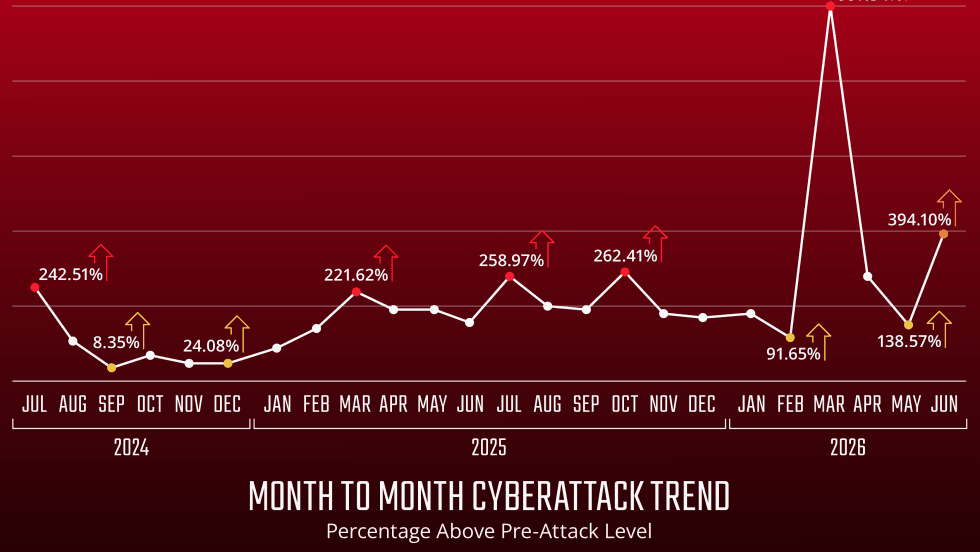
Dealerships More Frequent Cybercrook Targets
Analysis of the past year’s activity shows attacks on stores’ networks have surged dramatically as criminals leverage AI’s tools for volume and seeming legitimacy.
Read More →
Reynolds and RockEd Team Up
Via structured learning journeys and certifications, dealership personnel can get up to speed fast, a key component for success in rapidly changing retail automotive.
Read More →
Dealer Debrief: AI is Judging Your Website
In this week's debrief, host Lauren Lawrence talks about the importance of optimizing your website for AI-powered search as well as SEO.
Read More →
Your Dealership Is Being Judged by AI Search
Car shoppers are asking the tools where to buy, service and trade. The question is whether your dealership is showing up as the answer.
Read More →
Cox Automotive Tool to Streamline Dealership Workflows
The new Navigator offering is designed to work for dealers across the company's technology solutions for time savings and more.
Read More →
DAS Technology Earns Multiple Industry Honors
The company's Power AI Search was recognized for automotive artificial intelligence as .
Read More →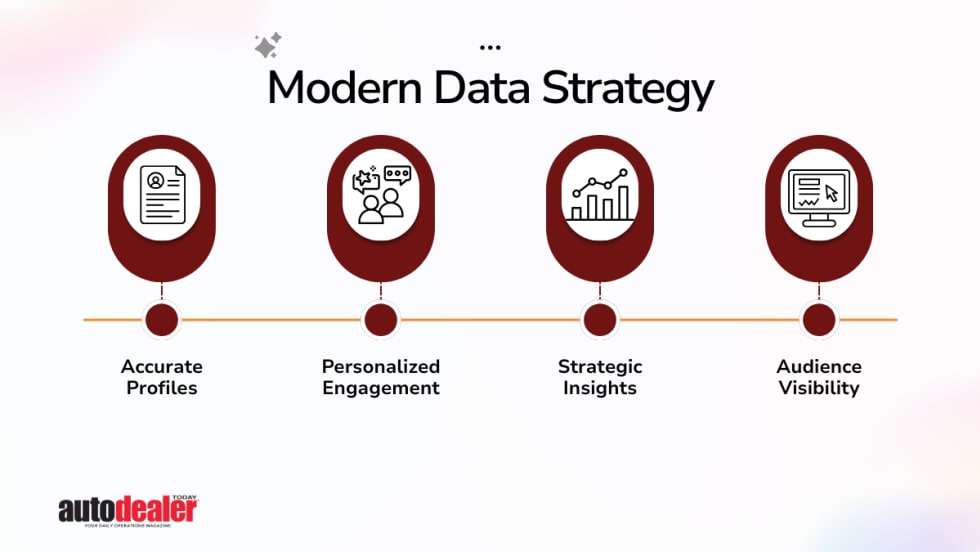
Reduce Fragmentation, Connect Customer Data
Automotive dealerships have the opportunity to reach more consumers by putting their customer data into a unified system, according to a new report.
Read More →
Dealer Debrief: Service Tech Recognition
In this week's debrief, host Lauren Lawrence covers a change to Automotive Service Professionals Month, a dealership acquisition, and a new Lexus rooftop!
Read More →
Dealer Debrief: Manufacturing Meets Demand
In this week's debrief, host Lauren Lawrence covers shifting strategies in the U.S. auto industry and how they reflect the current consumer demand.
Read More →