



A Tale of Haves and Have-Nots
A growing number of consumers are stretching the bounds of auto finance to afford today’s expensive vehicles, ultimately paying a higher price for the now-common scenarios.


JD Power found 84-month auto loans have climbed from 7% of auto sales in March 2019 to about 13% this March and 72-month loans from 36% to about 41%.
Pexels/www.kaboompics.com
Many auto consumers are stretching their finances to the breaking point to afford what in most parts of the U.S. is a necessity. Studies by JD Power and TransUnion point up the lengths many are stretching to buy cars.
Loan terms of 72 months are now “commonplace,” and even 84-month loans have entered the mainstream, JD Power reports.
Meanwhile, debt-to-income ratios have risen to new highs, especially among nonprime segments, according to TransUnion.
The consumer credit reporting agency says that from 2019 to 2025, nonmortgage DTI, which includes automotive loans, rose an average of 143 basis points among subprime consumers, and nonprime consumers already had much higher DTI levels than their prime counterparts.
Over about the same period, extra-long auto loan terms increased significantly, 84-month loans climbing from 7% of auto sales in March 2019 to about 13% this March and 72-month loans moving from 36% to about 41%, JD Power reported.
“In a climate of rising transaction prices, consumers continue to focus primarily on the monthly payment,” the company's report says.
“Extending the loan term reduces the payment to a manageable level without reducing the price of the vehicle. However, new-vehicle prices have risen so dramatically that, even with a large portion of buyers now opting for longer-term loans, the average monthly payment is still climbing.”
JD Power put March’s average new-vehicle monthly payment at $806, up 5% year-over-year.
Longer loans create a cycle of consumers “shopping” for better terms, many returning to the dealer after just three to four years, JD Power says. In fact, 45% of 84-month loan holders are doing so. One of the results of the practice, though, is negative equity on trade-ins, which was the case 26% of the time last year.
The two companies’ metrics illustrate the growing disparity between well-to-do and mass-market consumers.
“Super prime consumers generally remain well positioned to manage affordability challenges,” said TransUnion Head of U.S. Research and Consulting Michele Raneri, “while those in non‑prime risk tiers face growing stress as required payments consume an increasing share of their income.”
DIG DEEPER: Captive Auto Lenders Behind on Digital
More Industry
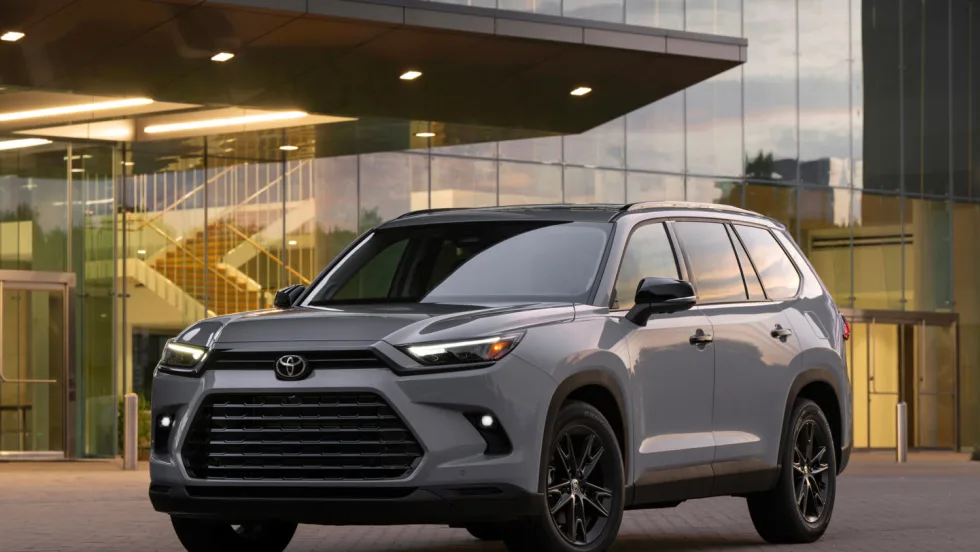
Savings Seekers Boost U.S. Automakers’ Rivals
As consumers here look for ways to curb inflation’s affect on their budgets, brands offering plenty of alternative powertrains are closing in on home-grown OEMs.
Read More →
The Slow Electric Ascent
Second-quarter data show that the electric-vehicle market in the U.S. is inching up, the majority of states seeing a month-over-month increase.
Read More →
Safer Rides & Cyberattacks
Vehicle crash testing is getting a virtual boost, but auto dealerships are facing increased cyberattacks. Learn more in this week's Dealer Debrief!
Read More →
Affordability Angst | Dealer Debrief
August saw little relief for car buyers, whether they were shopping new or used. Take a look at the month's breakdown in this week's Dealer Debrief!
Read More →
Virtual Crash Testing in the Works
A company's platform works alongside physical crash testing to gather insights into occupant response and injury mechanisms, with the idea of helping automakers develop safer vehicles.
Read More →
Tariff Tiff Examined
Some auto industry leaders are taking a relaxed view of the U.S.-Canada trade war while others worry that a dramatically adjusted playing field could mean too much collateral damage.
Read More →
EV Consideration Climbs
Despite the loss of federal EV incentives, interest has grown in the U.S., largely thanks to charging infrastructure improvements.
Read More →
August Auto Angst
The hot month brought hot-to-the-touch vehicle prices in the U.S. as consumers dived for more affordable models but found higher price tags to go with them.
Read More →
Arizona Stores in New Hands
The two franchises bring continued growth for a homegrown automotive group in its third generation of family ownership.
Read More →
Two New Rides Earn Safety Awards
Thanks to vehicle redesigns, two more vehicles have earned IIHS’ Top Safety Pick+ award that builds on the criteria of the lower Top Safety Pick award.
Read More →