



Chip Shortage Seen in Auto Industry
Analyst’s report shows chip makers for advanced systems have prioritized fast-growing and more lucrative artificial-intelligence customers, forcing automakers to pivot quickly.


Anticipated chip undersupply would most affect advanced driver-assistance and autonomous driving systems and cockpit systems that rely heavily on computations, especially in higher-end models.
Pexels/Salah Özil
The fast-growing development and use of artificial intelligence is poised to bring another chip shortage to the automotive industry after it had put pandemic-era deficits behind it.
A recent report by S&P Global predicts the industry will experience scarcity of dynamic random access memory, or DRAM, chips this year. Though the data analyst said the shortfall shouldn’t rival that of the Covid period, it’s likely to exceed problems seen during last year’s Nexperia disruptions.
S&P said the anticipated undersupply would most affect advanced driver-assistance and autonomous driving systems and cockpit systems that rely heavily on computations, which also underpin AI. DRAM makers have shifted more capacity toward high bandwidth memory for AI centers, whose demand and profitability greatly outweigh automotive uses, S&P reported.
Chip shortages can have dramatic effects on the supply of new vehicles. Pandemic-era chip deficits cut automotive production by more than 10 million units in 2021 alone, S&P said.
Last fall, a smaller disruption occurred during a dispute between chip supplier Nexperia and its partially state-owned Chinese parent during which the Dutch government temporarily took control of the company. Some automakers, including Honda and some Europe-based brands, experienced chip shortages.
Demand for AI after the release of the ChatGPT chatbot in late 2022 has driven increasing development of data centers and the chips that support them.
“DRAM manufacturers did not foresee this explosion in demand, and there is now a deficit of capacity for DRAM wafer fabrication,” S&P said. “While new investments in capacity have surged since 2023, is still takes years to build a new wafer fab.”
DRAM makers are also phasing out older chip technologies still commonly used for automotive applications by the end of next year, though autos, especially high-end models, are increasingly reliant on DRAM chips. Automakers will therefore need to redesign chip-reliant systems, the analyst reported.
“This shift has already sparked panic among OEMs and tier 1 suppliers, reminiscent of the rush to secure components during the 2021 crisis,” said S&P, which recommended automakers build “buffer” chip supplies, though that would offer “limited long-term relief.”
Meanwhile, automakers that pay more to match prices DRAM makers get from the AI industry should be able to get enough supply for their needs. In the case of new supply contracts, DRAM prices could be up 70% to 100% year-over-year in 2026.
S&P expects the auto industry will be able to swallow increased costs, but, “We could also see some anecdotal disruption to car production triggered mostly by panic buying however. Indeed the DRAM shelves are currently being emptied and an artificial shortage may occur.”
LEARN MORE: Auto Software Collaboration Grows
More Industry

Automaker Advances Safety for All
A new report by Volvo Cars Safety Centre analyzed the impact of 50 years' worth of research in automotive safety development
Read More →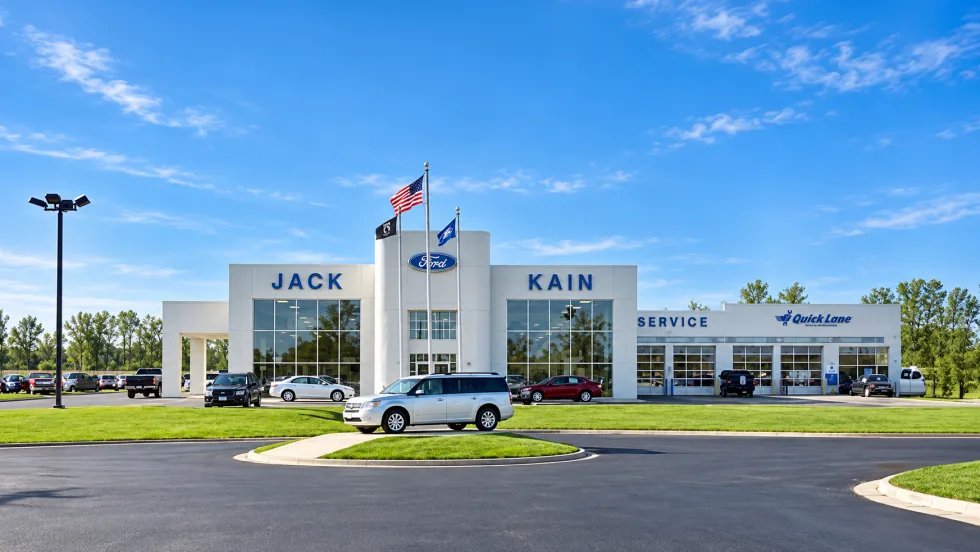
Kentucky Store Leaves Family
An auto group stretched across three states picked up the Lexington-area Ford fixture as its second store for the brand in the state.
Read More →
U.S. Auto Brands Falling Behind
Asian auto brands are outpacing U.S. brands in stateside new-vehicle sales. Learn more in this week's Dealer Debrief with Lauren!
Read More →
U.S. EV Market Update | Dealer Debrief
The U.S. electric vehicle market is slowly recovering from the loss of the federal EV tax credit last fall. Learn more in this week's Dealer Debrief!
Read More →
Auto Finance Numbers Set Records
Third-quarter data show how consumers are adapting to ongoing affordability challenges facing the new- and-used-vehicle markets.
Read More →
Auto Dealerships Can’t Afford to Ignore the 50+ Consumer
Younger generations may be all the buzz today when it comes to product marketing targets, but their older cohorts command a sizable share of purchasing power.
Read More →
Savings Seekers Boost U.S. Automakers’ Rivals
As consumers here look for ways to curb inflation’s affect on their budgets, brands offering plenty of alternative powertrains are closing in on home-grown OEMs.
Read More →
The Slow Electric Ascent
Second-quarter data show that the electric-vehicle market in the U.S. is inching up, the majority of states seeing a month-over-month increase.
Read More →
Safer Rides & Cyberattacks
Vehicle crash testing is getting a virtual boost, but auto dealerships are facing increased cyberattacks. Learn more in this week's Dealer Debrief!
Read More →
Affordability Angst | Dealer Debrief
August saw little relief for car buyers, whether they were shopping new or used. Take a look at the month's breakdown in this week's Dealer Debrief!
Read More →