



A Much-Needed Alignment for Dealers and OEMs
The best way to counter long-term changes in consumer behavior is by embracing change through innovation.

The best way to counter long-term changes in consumer behavior is by embracing change through innovation.
By any measure, 2020 has been a punishing year for the automotive business. Companies up and down the supply chain are reeling from the impact of the coronavirus crisis, bringing further disruption to an industry that was already dealing with plenty before the pandemic hit.
In a business increasingly driven by consumer experience, the customer is squarely in the driver’s seat.
The World Economic Forum summed up the auto industry’s recent hardships: “The crisis has massively hurt liquidity, supply, production, and demand. Companies have had to shut down factories and deal with plummeting sales and disrupted supply chains. As a result, revenues have dropped around the world.”
Accenture expects the fallout from the pandemic to linger. Not only does the consulting firm foresee global light vehicle sales dropping by about 12% in 2020, “it is very unlikely that these circumstances will change soon … Changes in customer behavior in response to being on ‘lockdown,’ such as less mobility and more online shopping, might remain after the crisis passes.”
The best way to counter long-term changes in consumer behavior is by embracing change through innovation.
“A crisis always offers the opportunity to break with old habits and experiment with new ways of doing things,” the World Economic Forum said in remarks aimed at members of the auto industry.
Among the industry’s biggest challenges is finding ways to connect with consumers in the “new normal.” One way to do so is with tighter collaboration between auto dealers and auto manufacturers, who, by working more closely together, can leverage their respective strengths to explore new business models, create new revenue streams, and address the customer expectation that their experience be seamless across the various touchpoints. Doing so requires not only innovative ideas, but also the agility — and the data-driven digital capabilities — to quickly, efficiently and intelligently collaborate, simulate, analyze, and scale-up ideas. Among the many collaborative opportunities that this new normal creates for dealers and manufacturers, here are a few that appear to be particularly promising.
Sales Re-Engineered.
Since virtual interaction with prospects and customers will be the norm for the foreseeable future, dealerships and their salespeople must find new ways to build trust and differentiate themselves with customers. Doing so starts with offering a robust digital e-commerce experience to prospects and customers via a unified portal accessible through multiple channels and curated jointly by the dealer and the manufacturer.
From that portal, a person can explore vehicle choices, and if they have questions, they can engage an expert for answers in real time. Through the portal, the customer can also schedule an actual test drive at a dealership. When the person shows up, their pre-arranged dealer contact hands over the keys for the test drive. However, instead of riding along, the salesperson stays behind and the prospect, during the test drive, tunes in the test vehicle’s radio to hear about vehicle features and options, current offers and incentives, and other information designed to push the sale forward. After the test drive is done, the prospect then can return to the portal, using online tools to pinpoint the exact vehicle they want.
Behind the scenes, the dealership and the manufacturer have a shared digital platform where they can view the prospect’s journey and jointly close the transaction online, perhaps by presenting the person with unique partner offers (for insurance, fuel, etc.) to sweeten the deal. The same platform serves as a common planning and allocation portal through which the dealer and manufacturer gain real-time visibility into inventory, transportation logistics, etc., so once the customer specifies the exact vehicle they want, they learn exactly when that vehicle will be delivered.
Marketing Reimagined.
Today’s automobile consumers want to engage with an automotive company on their terms, and they want that experience to be seamless, as if they’re working with a single entity. As for manufacturers and dealers, because their goal is the same — building lasting relationships with customers who bring long-term value — they need a unified digital platform through which to coordinate their marketing efforts and share customer and prospect data.
Digital tools enable dealers and manufacturers to precisely segment prospects, generate leads via predictive vehicle and fleet replacement data, and engage with those prospects with personalized offers and information. In this way, dealers and manufacturers can collaboratively cultivate relationships with the customers they seek. Using consent-based marketing and advanced analytics tied to a shared digital marketing platform, they can engage customers with pinpoint accuracy, providing them with personalized incentives and deals designed to attract and retain prime customers.
That’s exactly what BMW is doing today, using a collaborative digital experience management platform to solidify relationships with its dealers and end customers.
“The customer lifetime value is in the hundreds of thousands of dollars,” says Nicholas Boesch, customer satisfaction manager at BMW North America. “We have to get the experience right at every single dealership.”
Service Reinvented.
The coronavirus crisis resulted in opportunities for dealers and manufacturers to collaboratively remake the service side of the business so it aligns more with customers’ experience-focused sensibilities. Those opportunities include new mobile field services and other elevated concierge-type maintenance and repair services. A service event could start with a customer interfacing by videoconference with a service staff member to explain the issue and schedule a repair, followed by a contactless vehicle drop-off at the service location. Once the repair is complete, the customer is notified, pays for the transaction via the e-commerce portal, then picks up the vehicle.
Or the vehicle technician could go to the customer’s location, knowing exactly what the issue is and which tools and parts are needed to address it. During the onsite repair, the technician can interface with the onboard computer and the manufacturer as needed.
These types of service models are predicated on a high degree of supply chain visibility. Dealers need a digital supply chain platform that enables them to ascertain parts availability, delivery time, etc., to streamline the process and ultimately provide better outcomes for service customers. Using predictive supply chain analytics, they can uncover risks, segment and prioritize suppliers, post sourcing needs, and predict and mitigate bottlenecks.
New business models brought to life. The pandemic has created opportunities for OEMs and dealers to diversify their go-to-market approach by exploring new outcome-oriented business models.
Automobile-by-subscription is one such model. Generally speaking, subscribers pay a monthly fee for access to a vehicle or pool of vehicles. With many of the services, the fee covers the vehicle itself, plus insurance, maintenance, roadside assistance, and vehicle swap-outs. Porsche, Nissan, BMW, Volvo, Audi, and other automakers are wading into the subscription market on a limited basis. And in most cases, their dealers are integrally involved in making the service work. With the predictive tools to run business simulation scenarios, automakers and dealers (and other partners, such as insurance companies) can collaboratively come up with a subscription model that works for them and the ultimate consumer. Data collected from customers about their subscription experience, and from subscribers’ vehicles about performance, driving habits, etc., can then be used to improve and refine the service going forward.
Car subscription services are but one of many promising mobility solutions that dealers and manufacturers should be actively — and collaboratively — pursuing in order to thrive in the auto industry’s new normal. To do so, they will likely need to set aside the question of who ultimately owns the customer, because in a business increasingly driven by consumer experience, the customer is squarely in the driver’s seat.
Moncombu Raju is director of global solution management for the automotive industry business unit at SAP. He has worked extensively with large OEMs, suppliers, national sales organizations, and dealer groups during his close to three decades in the mobility business.
More Digital

TecAssured Expands Payment Capabilities
A new integration with ConnexPay is designed to give third-party administrators, agencies and dealers faster, more flexible payment options, improve efficiency and create profit opportunities.
Read More →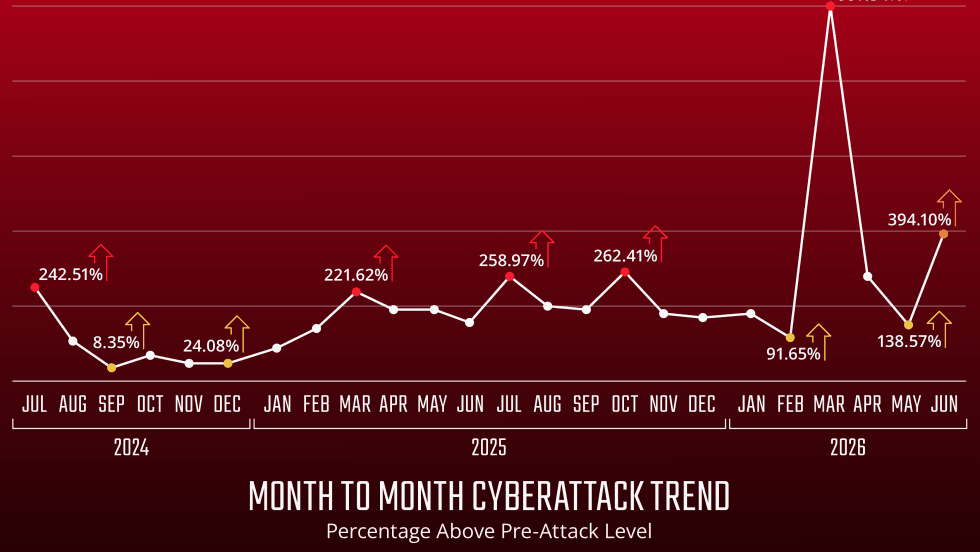
Dealerships More Frequent Cybercrook Targets
Analysis of the past year’s activity shows attacks on stores’ networks have surged dramatically as criminals leverage AI’s tools for volume and seeming legitimacy.
Read More →
Reynolds and RockEd Team Up
Via structured learning journeys and certifications, dealership personnel can get up to speed fast, a key component for success in rapidly changing retail automotive.
Read More →
Dealer Debrief: AI is Judging Your Website
In this week's debrief, host Lauren Lawrence talks about the importance of optimizing your website for AI-powered search as well as SEO.
Read More →
Your Dealership Is Being Judged by AI Search
Car shoppers are asking the tools where to buy, service and trade. The question is whether your dealership is showing up as the answer.
Read More →
Cox Automotive Tool to Streamline Dealership Workflows
The new Navigator offering is designed to work for dealers across the company's technology solutions for time savings and more.
Read More →
DAS Technology Earns Multiple Industry Honors
The company's Power AI Search was recognized for automotive artificial intelligence as .
Read More →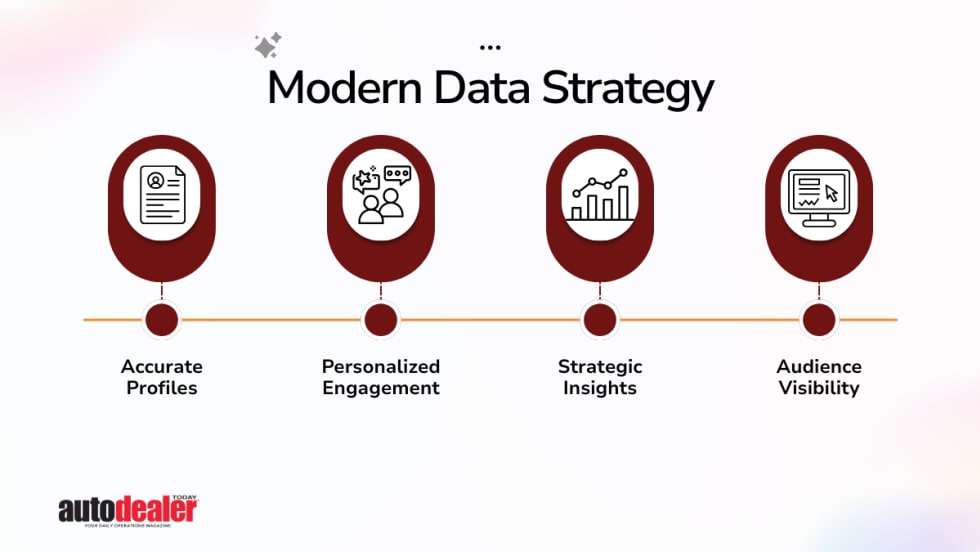
Reduce Fragmentation, Connect Customer Data
Automotive dealerships have the opportunity to reach more consumers by putting their customer data into a unified system, according to a new report.
Read More →
Dealer Debrief: Service Tech Recognition
In this week's debrief, host Lauren Lawrence covers a change to Automotive Service Professionals Month, a dealership acquisition, and a new Lexus rooftop!
Read More →
Dealer Debrief: Manufacturing Meets Demand
In this week's debrief, host Lauren Lawrence covers shifting strategies in the U.S. auto industry and how they reflect the current consumer demand.
Read More →